
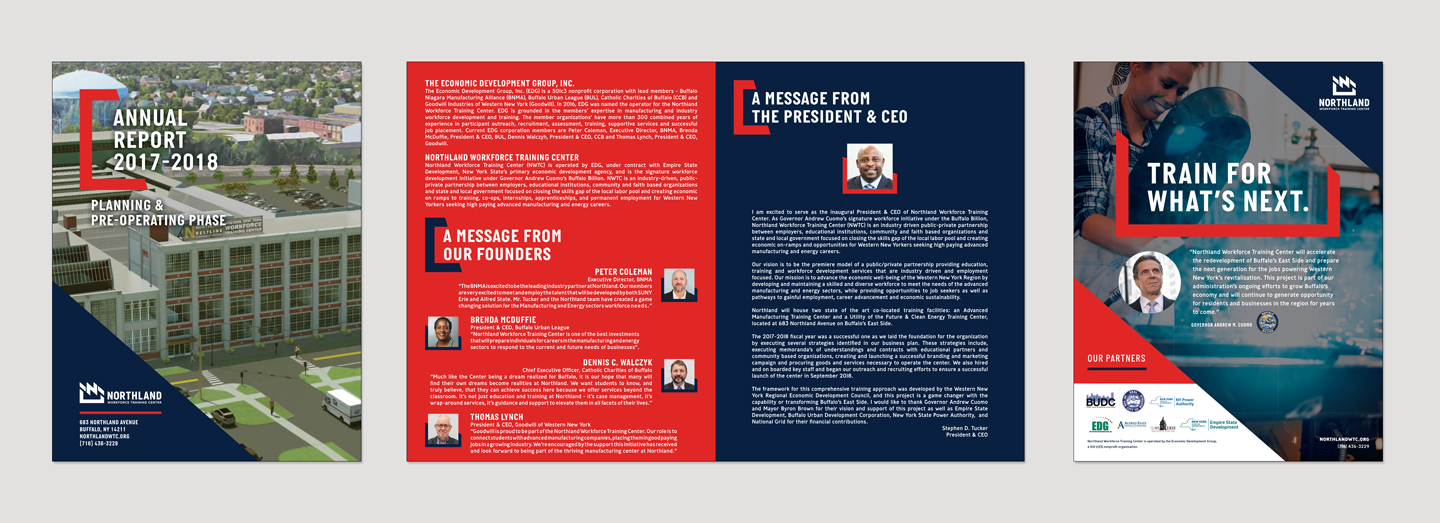
Designed a series of annual reports for Northland Workforce Training Center spanning fiscal years 2017–2018 through 2022–2023. Over multiple years, the report evolved from a simple 4-page document into a 16-page publication as content expanded. The project focused on translating increasingly complex information into a clear, structured format that stakeholders could easily navigate and understand.

Context & Constraints
The report followed brand samples provided by an outside agency, which established color, typography, and recurring motifs but did not function as a fully defined system. Content was gathered across multiple departments and needed to be organized into a cohesive format. The initial report focused primarily on leadership messaging, including the President’s and Founders’ statements.
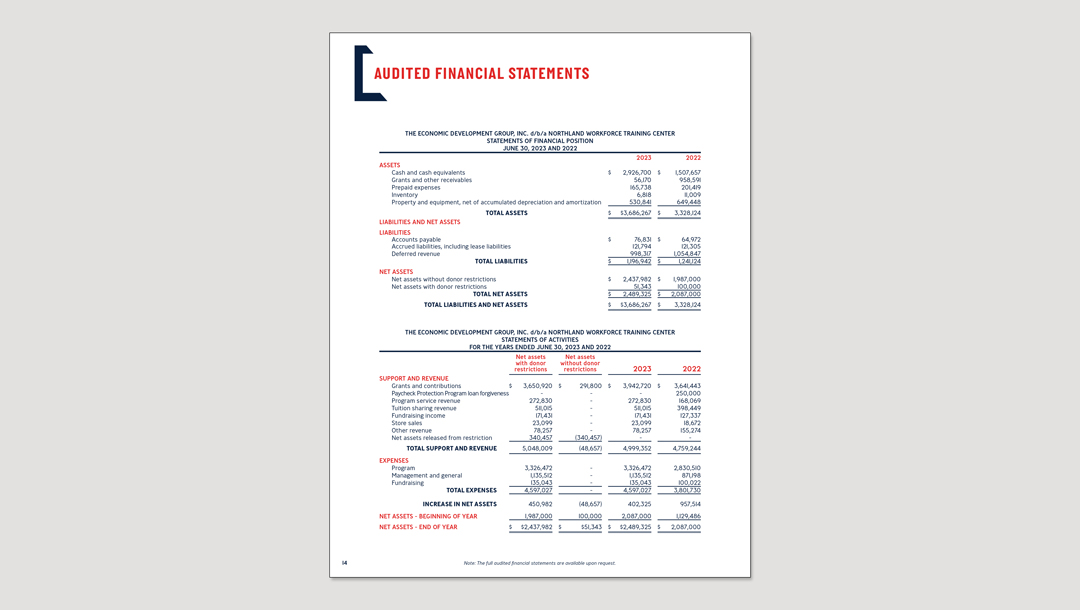
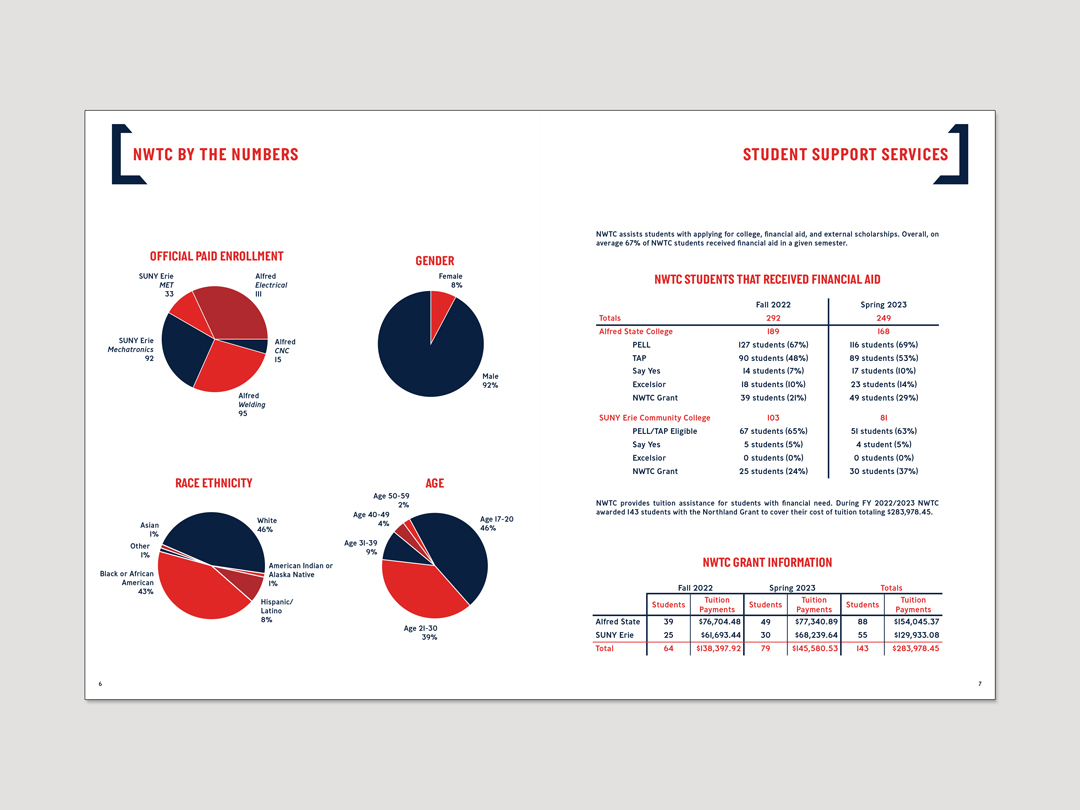
Over time, the report expanded to include demographic data, student profiles, and audited financial information, increasing both the volume and complexity of content. Financial data required complete accuracy, with no tolerance for discrepancies.
Process
The supplied agency samples were reviewed to understand the established visual direction. Working files were built with the appropriate fonts, color palette, and motif elements. Content was assessed by type, including financial data, program metrics, and narrative sections, to determine how each would need to be structured.
As the report expanded, content was organized to balance messaging, narrative elements, and data, helping maintain pacing and avoid reader fatigue as density increased. Financial data was styled using typographic hierarchy, alignment, and spacing to improve readability without altering its original structure, while recurring content types were given consistent layout treatments to keep the report feeling cohesive.
Development
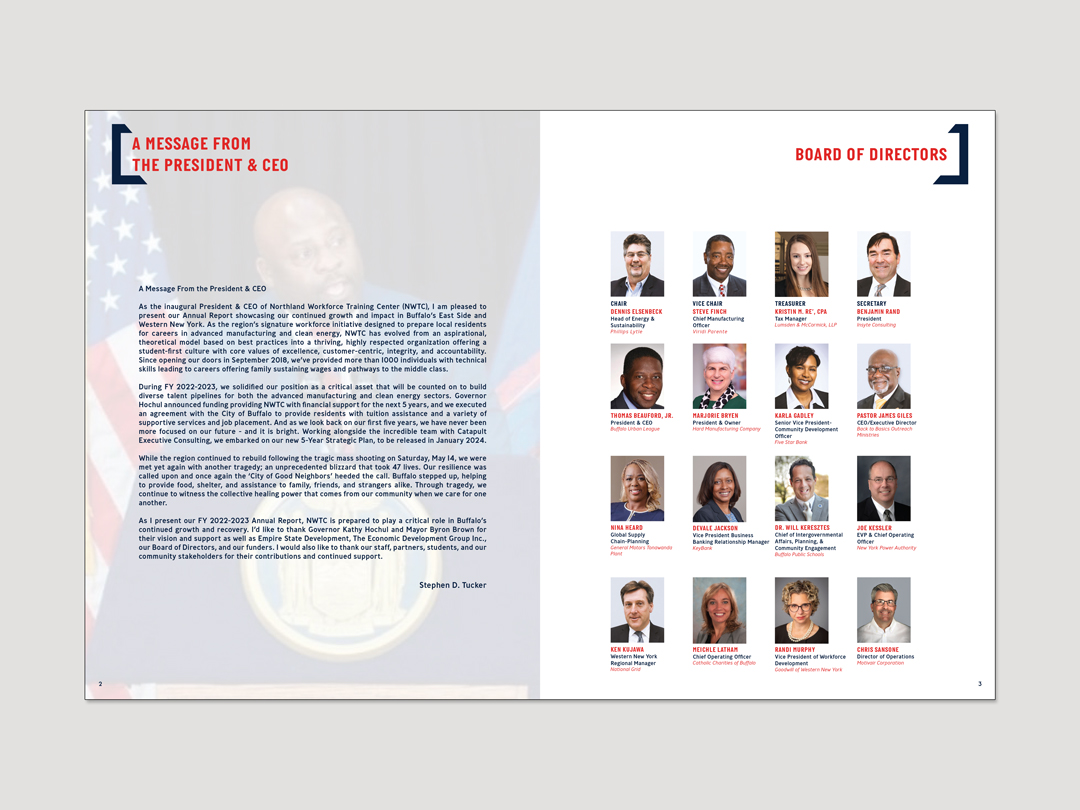
The initial layout was expanded into a flexible system to accommodate increasing content over multiple years. Different layout structures were developed based on content type, allowing financial data, charts, and narrative sections to be presented clearly while still feeling like part of the same report. Color, spacing, and hierarchy were used to separate content types and maintain readability as density increased, with brand elements applied in a controlled way to support the layout without overwhelming the content.
Key Decisions
- Kept audited financial data in its original structure to maintain accuracy, using typography, spacing, and color to introduce hierarchy
- Developed a layout system that could expand with the report as content increased
- Used color to separate content types and improve readability across dense information
Challenges
The increasing volume and variety of content over time, including dense financial and demographic data, required maintaining clarity while preserving accuracy. Frequent copy-level revisions during extended proofing cycles added complexity, requiring careful version control to keep iterations aligned. Flexible layouts and organized file structures allowed updates to be implemented without disrupting the overall design or introducing errors.
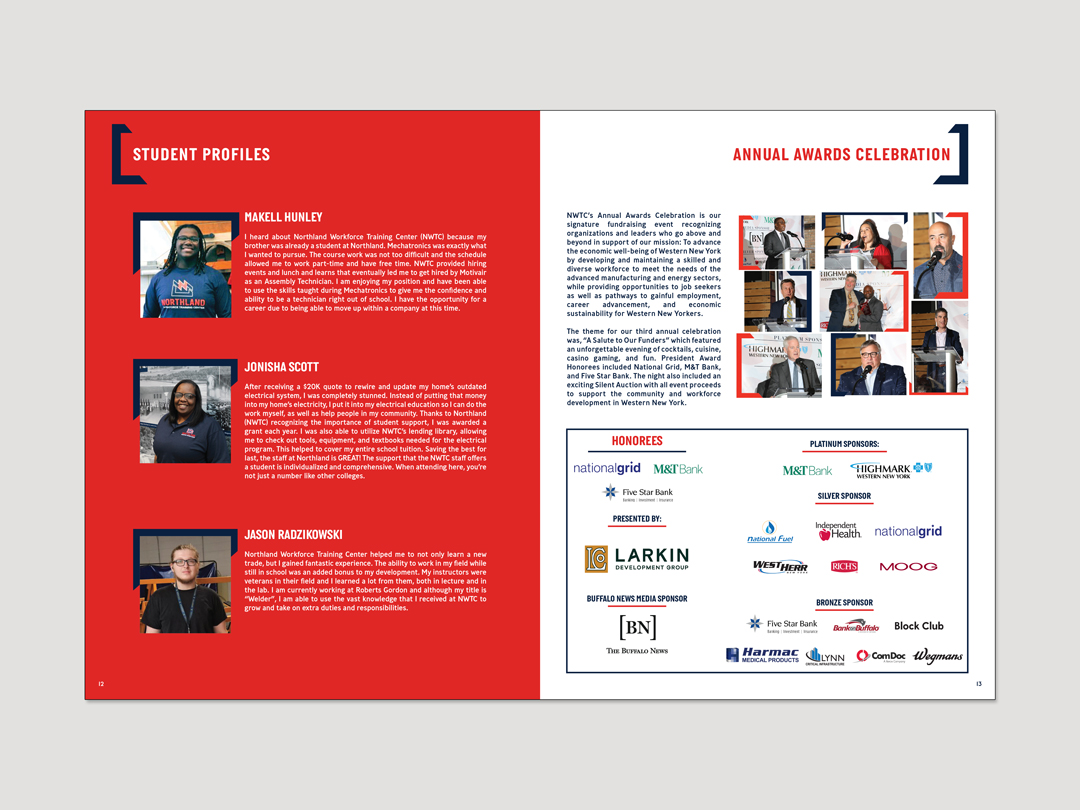
Outcome
The final reports present financials, program impact, and organizational growth in a clear, structured format for stakeholders. As the report expanded from 4 to 16 pages, the layout system scaled to accommodate increasing content while maintaining readability and consistency. The reports were distributed at annual gala events, supporting engagement with sponsors, partners, and community stakeholders.
Client: Northland Workforce Training Center
Role: Layout Design | Information Design
Date: December 2018 – February 2024