
Multi-year development of an in-house stationery product line.
Buffalo Design & Printing developed an in-house stationery line for wholesale buyers, spanning multiple product formats and sales channels. As the line expanded, it required consistent production standards, scalable organization, and a cohesive visual direction that unified previously separate product styles.
Vision
Sell the Line, Showcase the Work
The stationery line was developed for wholesale buyers, supported by a catalog designed to present the products for sale. The catalog also needed to demonstrate Buffalo Design & Printing’s manufacturing capabilities to potential stationery brand clients.
Role & Scope
Direction to Production
Product direction and creative concept for the stationery line were established by company ownership. I translated that direction into a visual system and product designs that could be manufactured, cataloged, and sold. Over time, the scope expanded beyond individual product designs to include the organization and presentation of the entire line across catalogs, trade shows, and online sales channels.
Responsibilities
- Production-ready file setup
- Visual design across multiple product categories
- Translating legacy designs into updated brand systems
- Managing and extending the SKU structure
- Catalog layout and structural organization
- Product photography direction and execution
- Trade show booth graphics, signage, and supporting materials
- Online product listings and MIS-integrated web-to-print ordering
As the line grew, the role expanded to include maintaining consistency across an increasingly complex product system.
Process
The Stationery Line as a System
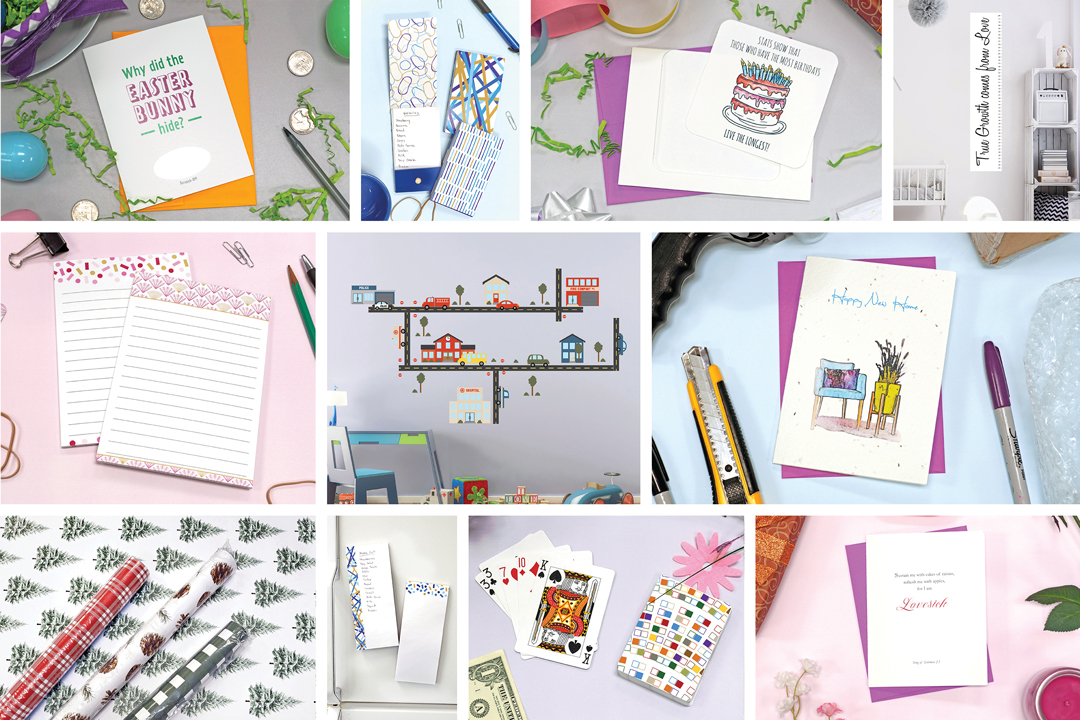
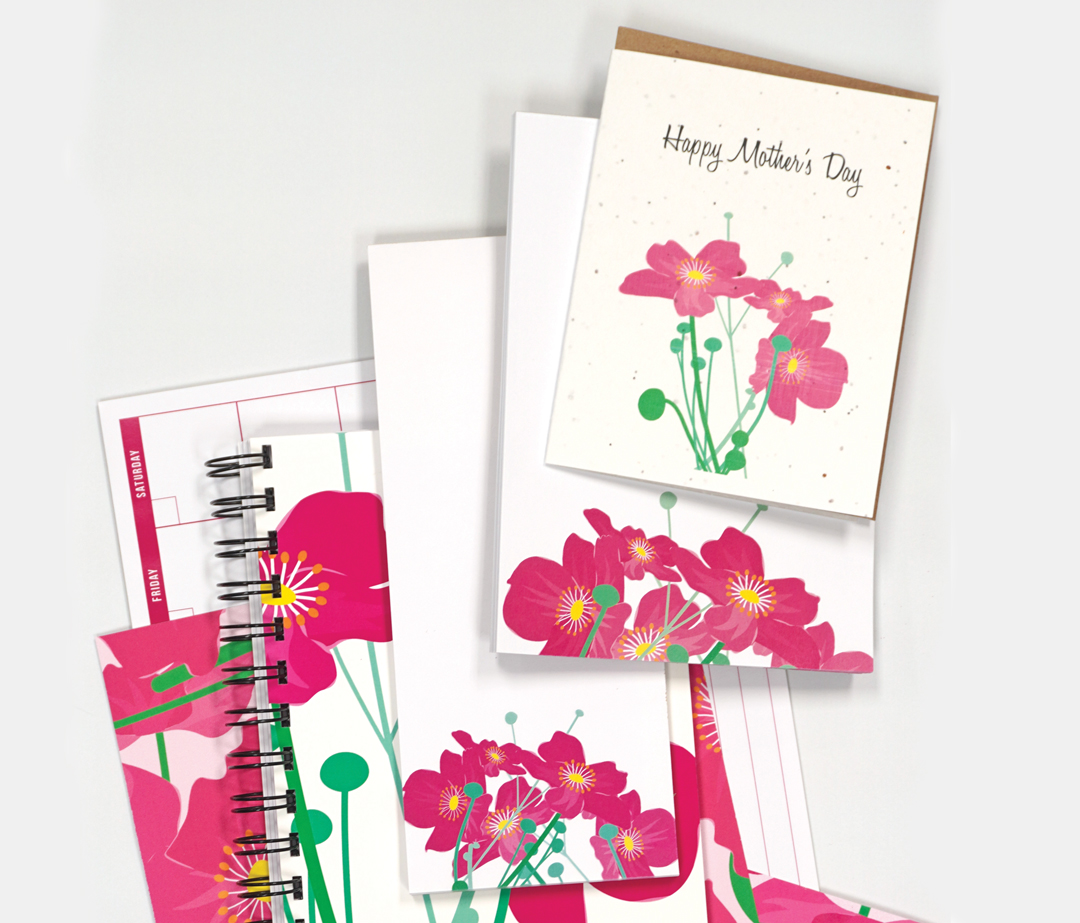
What began as a small set of products expanded into a broad stationery line spanning multiple formats, including:
- Scratch-off cards
- Seed paper cards
- Pop-out coaster cards
- Notecards
- Playing cards
- Wrapping paper rolls
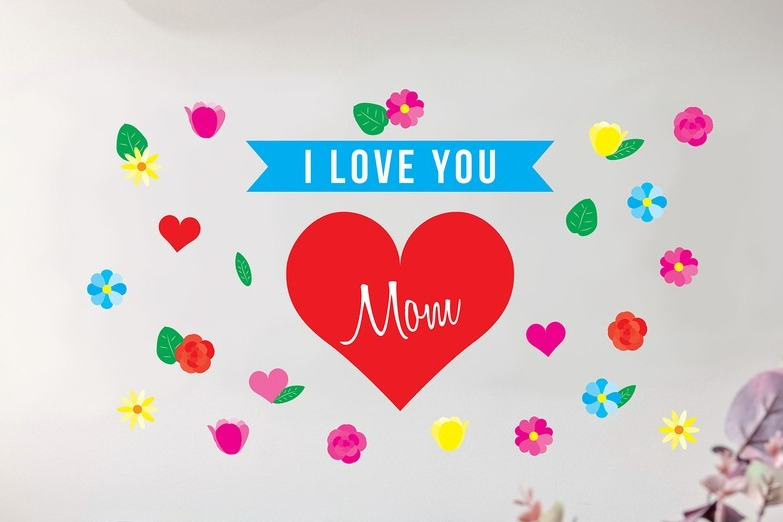
- Wall decal sets
- Height charts
- Journals
- Calendars
- Magnets
- Luggage tags
- Paper airplane cards
- Mousepads
- Various notepad formats
The challenge was not just adding new products, but maintaining a structure that could support the growing line without fragmenting it. SKU logic, file naming conventions, and production-ready file setup were established early and extended as the product mix grew, allowing new products to be introduced without disrupting existing workflows.
Creating a Cohesive Identity
Individual product categories maintained their own visual styles, resulting in a lack of cohesion when the line was presented across wholesale, catalog, and trade show settings. The line was rebranded to establish a consistent visual identity across all product categories. The updated system introduced a unified visual language rooted in print-inspired elements, along with a consistent color palette and typography framework. Existing products were translated into the new system, preserving continuity while bringing the line into alignment.



A Catalog Built to Evolve
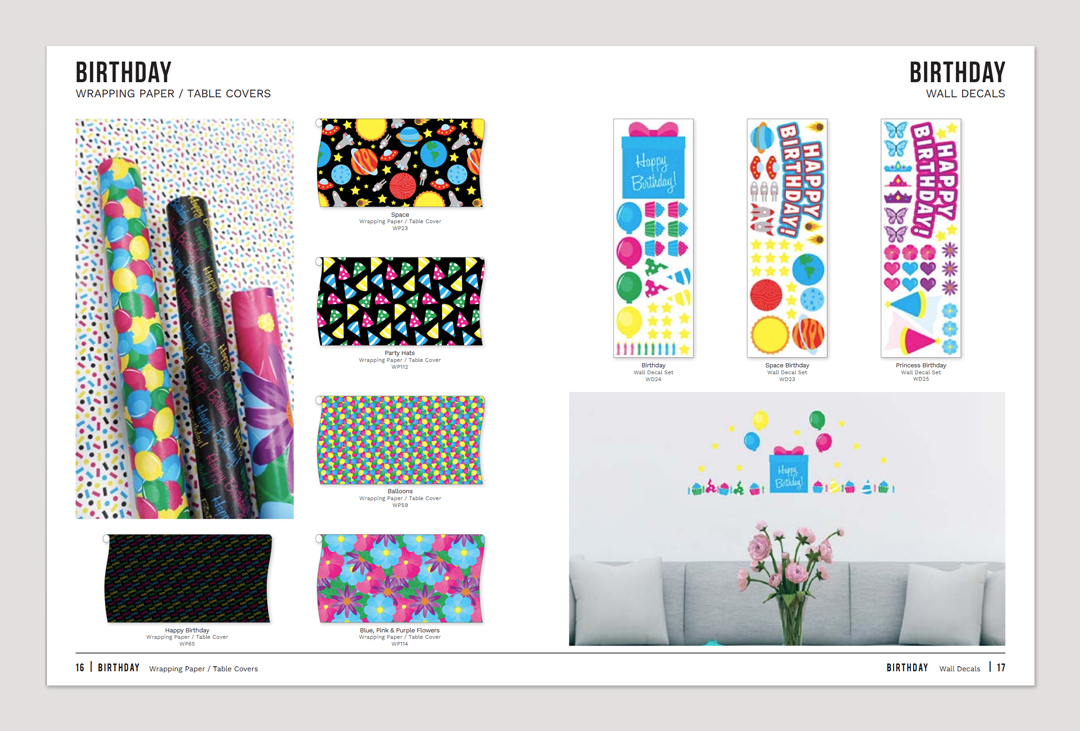
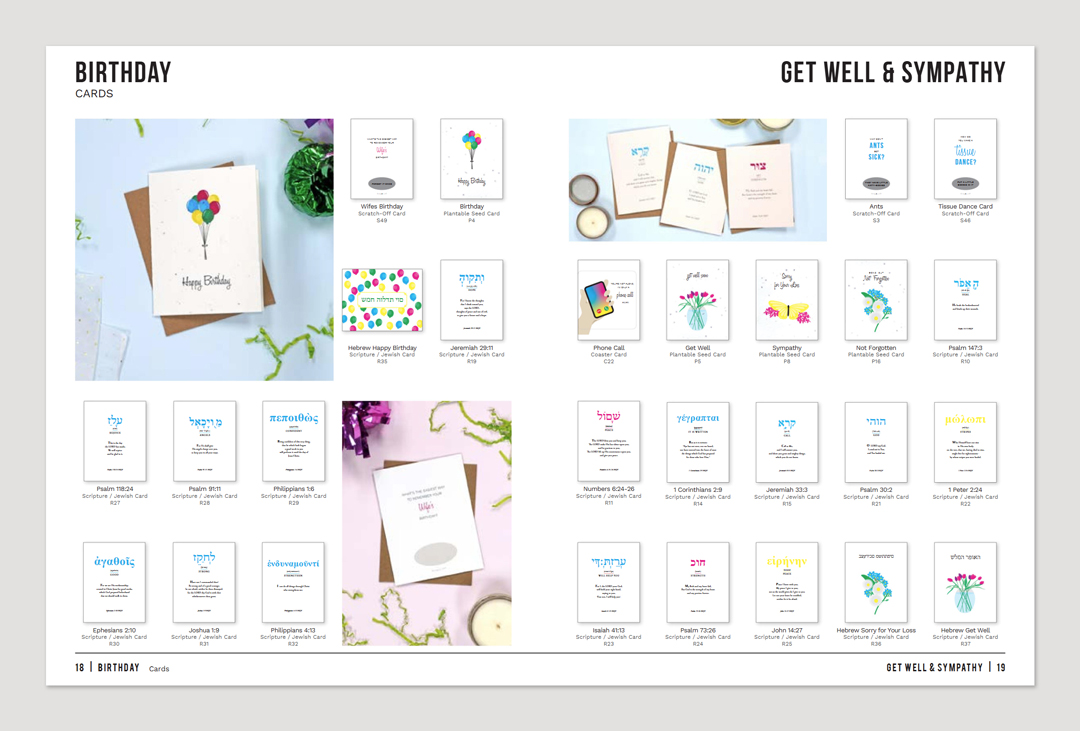
As the product line expanded, the catalog shifted from a simple product listing to a structured wholesale tool. Early versions grouped products by type, but the catalog was reorganized by occasion and use case to reflect how buyers navigate the line.
A grid-based layout and consistent typographic hierarchy were established to maintain clarity across pages and support the addition of new products. Product photography was introduced to standardize presentation and improve consistency across the catalog, creating a system that could evolve across multiple editions without requiring a full redesign.
Challenges
Maintaining Cohesion Through Expansion
Early versions of the stationery line and catalog were already in place before the rebrand. When the visual system was updated, existing designs needed to be translated into the new brand while maintaining continuity across the product line.
After the rebrand, the stationery line expanded with the introduction of additional product types. New designs needed to fit within the updated visual system while remaining visually consistent alongside earlier products as the line continued to grow.
Direction was typically provided broadly, with work progressing independently, and periodical feedback from company ownership shaping revisions. The primary challenge throughout the project was maintaining cohesion across an expanding product line while the catalog, designs, and product mix continued to evolve.
Key Decisions
Designed for Scale & Consistency
- The catalog was reorganized by occasion and use case, improving how wholesale buyers navigate the line.
- A unified visual system was established across formats, creating consistency when the line was presented as a whole.
- A grid-based layout and typographic hierarchy were built, allowing new products to be added while maintaining structure.
- Product photography was introduced, establishing a consistent visual standard across the catalog and supporting materials.
Development
Extending the Line Across Channels
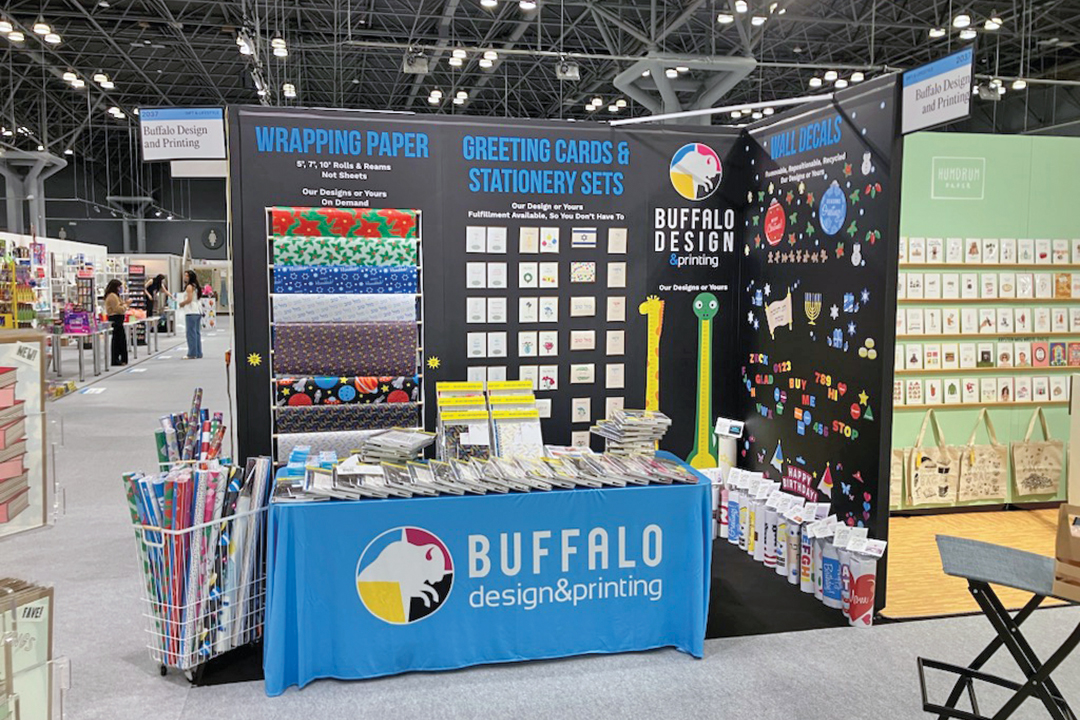
The stationery line was presented across trade shows and online sales channels, where products, catalogs, and supporting materials worked together to introduce the line to wholesale buyers while demonstrating manufacturing capabilities to potential clients.
Design work extended beyond the products themselves to include materials used to display and sell the product line, including:
- Booth wall graphics and large-format displays
- Show signage and supporting collateral
- Line cards and pricing sheets for wholesale buyers
Online listings were maintained across multiple platforms, supported by a centralized product tracking system that managed SKU information, product descriptions, and catalog placement. This structure ensured consistency across channels as new products were introduced and older designs were phased out.
Social and motion content was also created to support the stationery line, extending the visual system into short-form digital formats.
Challenges
Maintaining Consistency at Scale
Existing products and catalog structures were already in place before the rebrand. Updating the visual system required translating those designs into the new framework while maintaining continuity across the product line.
As new product types were introduced, each needed to align with the updated system while remaining visually consistent alongside earlier designs. Maintaining that consistency across formats, catalog layouts, and sales materials became more complex as the line continued to grow.
Direction was provided broadly, with work progressing independently and periodic feedback shaping revisions. Maintaining cohesion across the system required ongoing judgment as new formats and content were introduced.
Outcome
A Scalable Product Line
By later editions, the stationery line functioned as a cohesive, scalable product line rather than a collection of individual designs. The rebrand and catalog refinements strengthened the presentation of the line across wholesale materials, trade show displays, and product listings, improving how the product line was communicated and evaluated by buyers.
Developed within a manufacturing environment, the work balanced visual design, production requirements, and organizational structure to support continued growth.
Client: Buffalo Design & Printing
Role: Production Design | Product Development | Layout Design
Date: October 2019 – September 2024