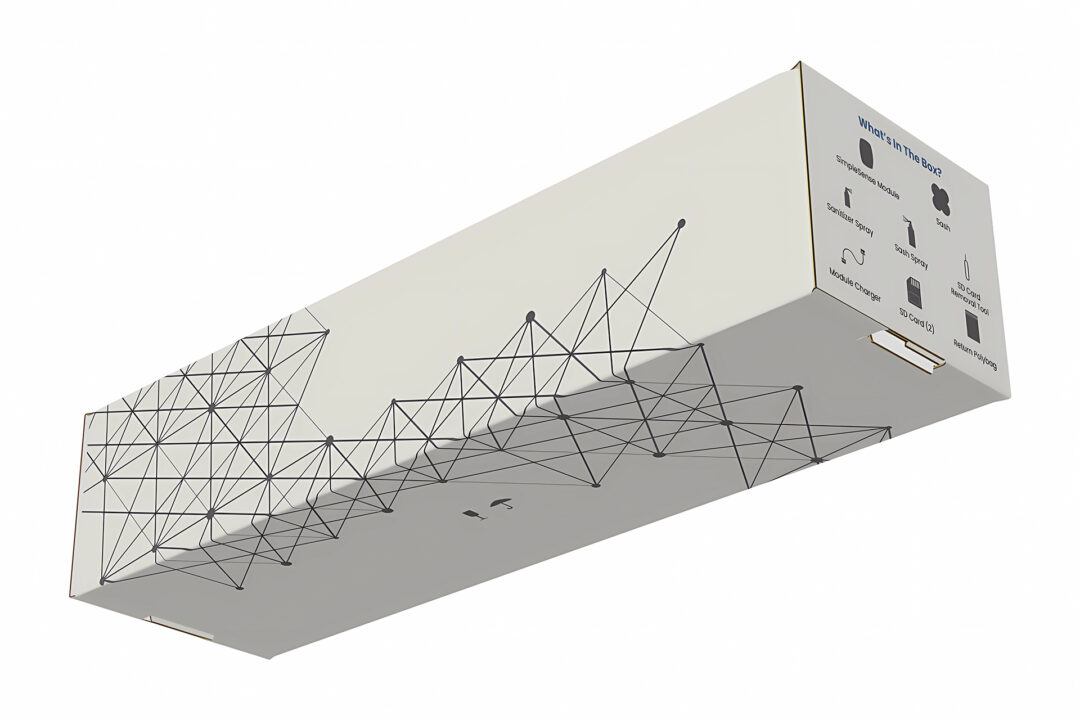
Nanowear’s SimpleSense is a medical-grade remote patient monitoring wearable distributed through healthcare channels rather than consumer retail. Since it would move through clinical settings and fulfillment before reaching patients at home, the packaging needed to clearly identify the product while establishing trust at first glance.
Client’s Vision
Clinical Confidence
Although the device is worn at home, it’s part of a broader clinical care system. The packaging needed to feel medical and dependable, while remaining clear and easy to understand for both healthcare providers and patients. That balance guided the direction, alongside the realities of production and regulatory requirements.
Process
Networked Design
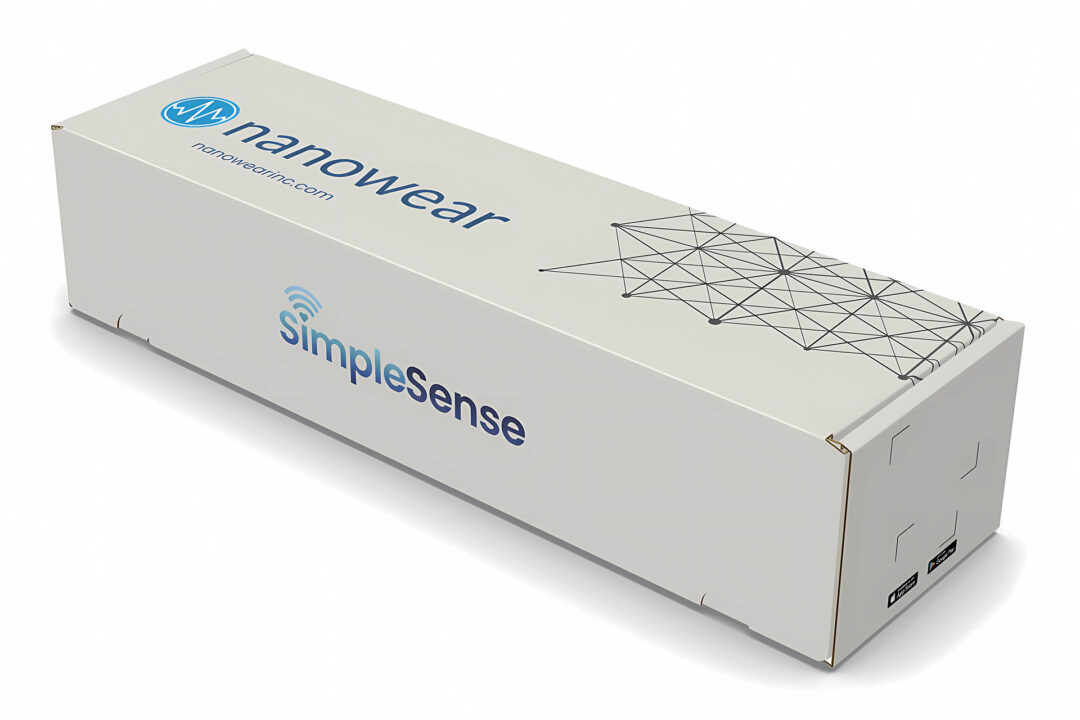
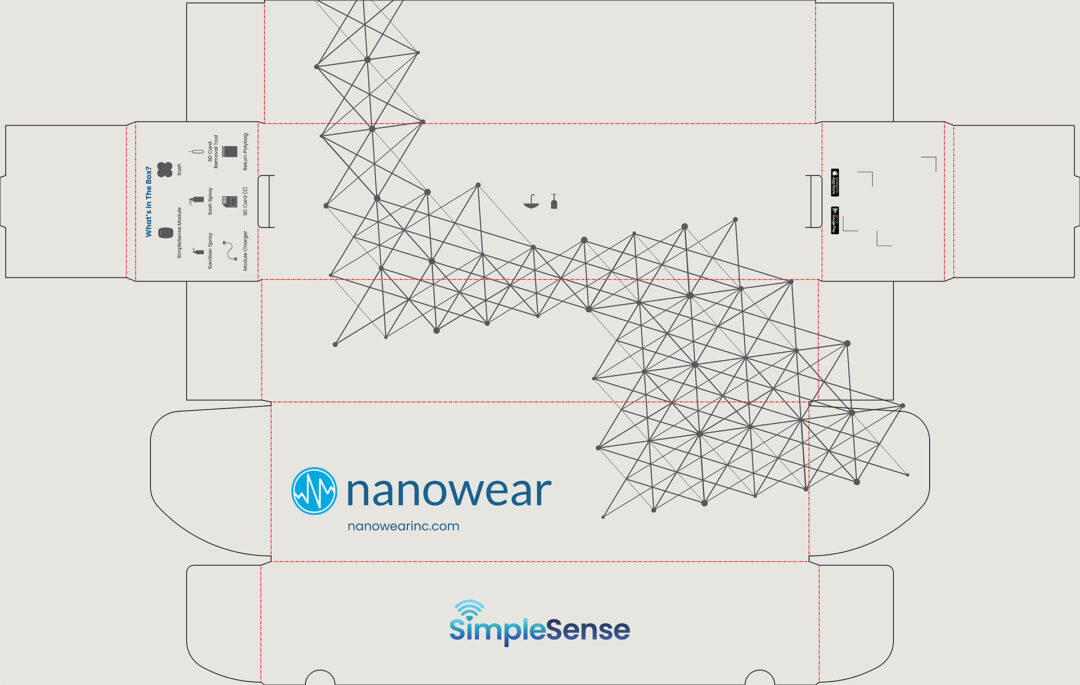
The color palette was already locked into gray, so visual interest needed to come from something other than color. Within those defined constraints, a network-inspired motif was developed, drawing on ideas of connectivity and data flow that naturally align with remote patient monitoring. Contrast and scale allowed the motif to expand across panels while keeping primary product information clear and easy to find.


Structured Navigation
The box structure dictated how information could be organized, establishing a clear hierarchy across panels. Brand and product logos stayed on the primary panels, while “what’s in the box” details were placed on a side panel, where users typically expect to find that information. Return and contact messaging was held for the interior, appearing only after the box was opened.
With limited copy provided, typography stayed simple and functional, reinforcing clarity over decoration. Poppins aligned with Nanowear’s existing brand presence, while hierarchy and spacing helped guide the reader without making the package feel crowded.






Shift & Integrate
As new required elements were introduced, the overall direction stayed the same while the network motif adjusted to make room for them. The pattern wove around fixed content and regulatory placements, helping the package remain cohesive even as more information was added.
Challenges
Creative Restraint
Most of the packaging was already defined by production and regulatory specs, which left limited room for visual expression. The challenge was finding a way for design to contribute meaningfully without pushing against clinical expectations. The network motif became that opportunity, adding structure and connection while keeping the package appropriate and compliant.
Outcome
Controlled Reveal
The final packaging presented a clean, clinical face on primary panels, establishing trust at first glance. As the box was handled, the network-based motif expanded across secondary surfaces, reflecting the product’s connected nature. Clear hierarchy and iconography supported efficient handling across clinical distribution and patient use. The package remains minimal on shelf, with more detail visible once handled.